Bigger Numbers, Slower WiFi: The Transmit Power Trap Most Shoppers Fall Into
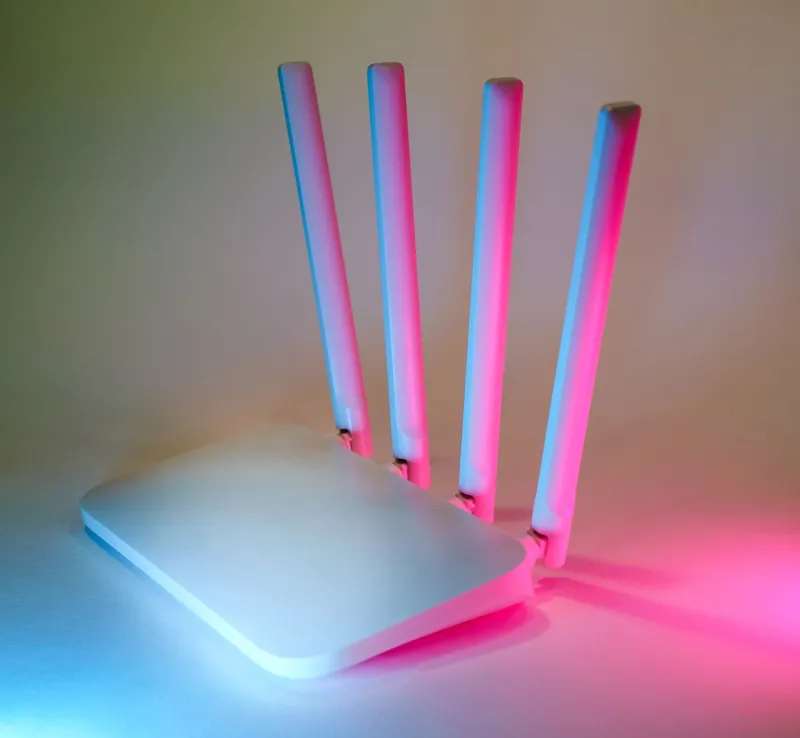
Walk into any Best Buy or scroll through Amazon's WiFi extender listings, and you'll notice a pattern. Manufacturers love slapping high transmit power figures front and center — 200mW here, 26dBm there — like they're selling amplifiers for a stadium concert. The implication is obvious: more power equals stronger signal equals faster internet everywhere in your house.
Except that's not really how any of this works.
The relationship between transmit power and real-world WiFi performance is one of the most misunderstood corners of home networking. And if you've been shopping for an extender based on wattage specs alone, there's a decent chance you've either overpaid for something that underdelivers or ended up with a device that's actively making your network worse.
Let's break down what's actually going on.
What Transmit Power Actually Measures
Transmit power describes how loudly your extender shouts its wireless signal. Higher power means the radio waves travel farther and punch through more obstacles — walls, floors, that weird dead zone behind your refrigerator. In theory, more power should mean better coverage.
But here's the thing WiFi is a two-way conversation. Your extender might be screaming at full volume, but your laptop, phone, or smart TV can only whisper back. The transmit power on your client devices — the gadgets connecting to the network — is fixed and usually pretty modest. A typical smartphone transmits somewhere between 15mW and 100mW. Your shiny new 200mW extender can hear itself just fine, but it's working with a partner that can barely raise its voice.
This creates what engineers call an asymmetric link. The extender hears your devices poorly even when those devices can hear the extender clearly. The result? Slower speeds, more retransmissions, and a frustratingly inconsistent connection — regardless of how powerful the extender's radio is.
The Plateau Nobody Talks About
There's another uncomfortable reality buried in the specs: beyond a certain threshold, additional transmit power stops helping and starts causing problems.
WiFi channels aren't private conversations. They're shared airspace, and every device in range — your neighbors' routers, other extenders, baby monitors, microwaves — contributes to what's called the noise floor. When you crank up your extender's transmit power, you're not just boosting your own signal. You're also amplifying interference and creating more congestion on already-crowded channels.
In dense neighborhoods or apartment buildings, a high-powered extender can actually degrade performance for every device on your network by drowning out the quieter signals that matter most. You've essentially turned your home network into that one guy at a party who thinks talking louder makes the conversation better for everyone.
Real-world testing consistently shows that performance plateaus well before manufacturers' maximum power specs. The gains from pushing from 100mW to 200mW are often negligible under normal home conditions. The gains from pushing beyond that are frequently negative.
Why Manufacturers Keep Selling the Power Story
So why do brands keep leading with these specs? Simple: they test well on paper and look impressive in a bullet-point comparison chart.
A consumer standing in a store comparing two extenders — one rated at 100mW and another at 200mW — is naturally going to assume the higher number is the better product. The manufacturer knows this. The retailer knows this. And the actual engineering behind whether those specs translate to better performance in your specific home? That nuance doesn't fit on a product tag.
Higher transmit power specs are also genuinely useful in certain scenarios — large open spaces, commercial environments, or homes with thick concrete walls where signal attenuation is extreme. But those edge cases get marketed as universal selling points, which is where the disconnect between spec sheet and living room reality really kicks in.
What You Should Actually Look At
If transmit power is a misleading metric, what should you be evaluating when shopping for an extender? A few things matter a lot more:
Receiver sensitivity — This tells you how well the extender can detect weak signals coming back from your devices. A high-sensitivity receiver does far more for your real-world experience than raw transmit power. Unfortunately, this spec is rarely highlighted on packaging.
MU-MIMO support — Multi-user, multiple input, multiple output technology lets the extender handle several devices simultaneously without making them queue up and wait. In a house with a dozen connected gadgets, this matters enormously.
Band steering and dual-band or tri-band operation — An extender that intelligently moves devices between the 2.4GHz and 5GHz bands based on their needs and location will outperform a brute-force high-power single-band device almost every time.
Backhaul connection quality — How the extender talks back to your main router is often the actual bottleneck. A dedicated backhaul channel (common in mesh systems and some newer extenders) keeps that link clean and fast regardless of how many devices are connected.
Real-world reviews from similar home setups — This one sounds obvious, but it's worth emphasizing. A 2,000-square-foot ranch house with drywall construction has completely different needs than a three-story brick colonial. Seek out reviews from people whose homes resemble yours.
The Right Way to Think About Signal Strength
Instead of fixating on how hard your extender can shout, think about placement and channel management. An extender with modest transmit power positioned correctly — roughly halfway between your router and the dead zone, with a clear line of sight in at least one direction — will outperform a high-powered device stuffed in a closet or crammed behind a TV stand.
Most modern extenders also let you manually adjust transmit power in their settings. If your current device is set to maximum and you're experiencing inconsistent speeds or interference, try dialing it back. You might be surprised. Sometimes "less" is genuinely more.
Auto-channel selection is another underrated feature. An extender that scans the spectrum and picks the least congested channel will maintain better speeds over time than one locked to a manually configured channel that three of your neighbors are also using.
The Takeaway
More transmit power is not a reliable proxy for better WiFi performance. It's a spec that's easy to manufacture, easy to market, and genuinely useful in a narrow set of circumstances — but it tells you almost nothing about how an extender will actually behave in your home.
When you're comparing models, look past the wattage numbers. Dig into receiver sensitivity, MIMO configuration, band management, and backhaul architecture. Read reviews from real users in real homes. And remember that placement, channel selection, and network configuration will almost always move the needle more than raw power specs ever could.
Extending your signal is about smart coverage, not maximum volume. The best extender for your home is the one that listens well — not just the one that yells the loudest.